If you have a shed on a rural property and are contemplating converting it into a fully operational workshop, it is essential to prioritise the electrical setup. Utilising a MIG welder, air compressor, and table saw on the same circuit as your home can result in numerous complications, including frequent trips of circuit breakers, flickering lights, and potentially dangerous overload situations that compromise safety and operational efficiency.
This detailed guide outlines the key aspects of wiring a dependable workshop in rural regions of the Mid North Coast. We will delve into the significance of dedicated circuits, sub-boards, and the advantages of three-phase power for larger machinery. If your requirements are limited to basic power needs—such as lighting and a few outlets—please refer to our guide on Shed Wiring on Acreage for a suitable starting point. This article specifically addresses workshops that demand substantial power for intensive tasks.
Recognise the Significance of Dedicated Circuits for Workshop Power
Many households operate multiple power outlets on shared circuits, which is usually adequate for low-power appliances like kettles and televisions. Issues arise when attempting to run a 32-amp MIG welder and an air compressor simultaneously. This can lead to serious complications if not managed correctly.
Consider the possible consequences of connecting heavy machinery to household circuits:
- Frequent tripped breakers — A welder drawing over 30 amps on a 20-amp circuit will trip the breaker immediately or, worse, cause the wiring to overheat before the breaker can respond.
- Voltage drops — Long cable runs from the main board to the shed can result in voltage sag, causing your tools to operate at higher temperatures, perform slower, and wear out more quickly.
- Power disruptions in the home — Your partner may experience a blackout in the kitchen due to the compressor’s startup, often leading to uncomfortable discussions.
- Increased fire hazards — Overloaded wiring within walls and along cable runs is a leading cause of electrical fires in rural communities.
Installing dedicated circuits can effectively mitigate these concerns. Each heavy tool receives its own dedicated circuit, appropriately sized for its load, along with individual breaker protection. This arrangement ensures that nothing is shared, eliminating the risk of overload.
Assess the Power Requirements of Common Workshop Equipment
Before your electrician can create an effective circuit layout, it is crucial to understand the power demands of your equipment. Below is a breakdown of the typical power consumption for common workshop tools:
- MIG welder — Requires between 15A and 32A depending on the model. Larger 240V welders typically operate at the higher end. Three-phase units will have different power requirements (more on that later).
- Air compressor — Consumes approximately 10A to 15A. The startup surge can be substantial—compressor motors often draw three to four times their running current for a few seconds upon startup.
- Table saw — Generally uses between 10A to 15A for a quality cabinet saw. Less expensive contractor saws may consume less power, but you are likely not looking for a budget option.
- Lathe (wood or metal) — Similar to table saws, these typically require between 10A and 15A, with metal lathes generally being on the higher end.
- Dust extractor — Approximately 10A for a single-phase unit. It must operate continuously while using other tools, meaning it should have its own circuit.
- Plasma cutter — Draws between 20A and 30A, similar to a welder, thus requiring a dedicated circuit.
When you sum the power draw, it becomes clear that a single 20-amp circuit from the house will not suffice. A well-equipped workshop can easily demand 80 to 100+ amps across all circuits when operating at full capacity, underscoring the need for a comprehensive electrical plan.
Choose the Correct Circuit Breaker Size and Integrate RCD Protection
Every circuit in your workshop requires a breaker that aligns with the cable size and expected load. Your electrician will calculate this based on your equipment, but as a general guideline, consider the following:
- 15A or 20A circuits — Ideal for general power points, dust extractors, lighting circuits, and lighter tools.
- 32A circuits — Essential for welders, plasma cutters, and other heavy single-phase machinery that requires considerable power.
- Three-phase breakers — These should be sized according to specific equipment requirements (details below).
RCD protection is vital. In accordance with AS/NZS 3000 (the Australian Wiring Rules), all power and lighting circuits must include RCD (safety switch) protection. This legal requirement is intended to safeguard against the high-risk nature of workshop environments.
Concrete floors, metal tools, dust, and moisture heighten the likelihood of earth faults. RCDs quickly cut power if there is a current leak to earth, which can differentiate between a minor shock and a serious injury.
Typically, your electrician will implement a combination of RCDs and MCBs (miniature circuit breakers), or RCBO units that integrate both functionalities. RCBOs are particularly advantageous in workshops because a fault in one circuit does not disrupt power to others, resulting in a more reliable electrical system.
Install a Dedicated Sub-Board to Fulfil Your Workshop’s Electrical Needs
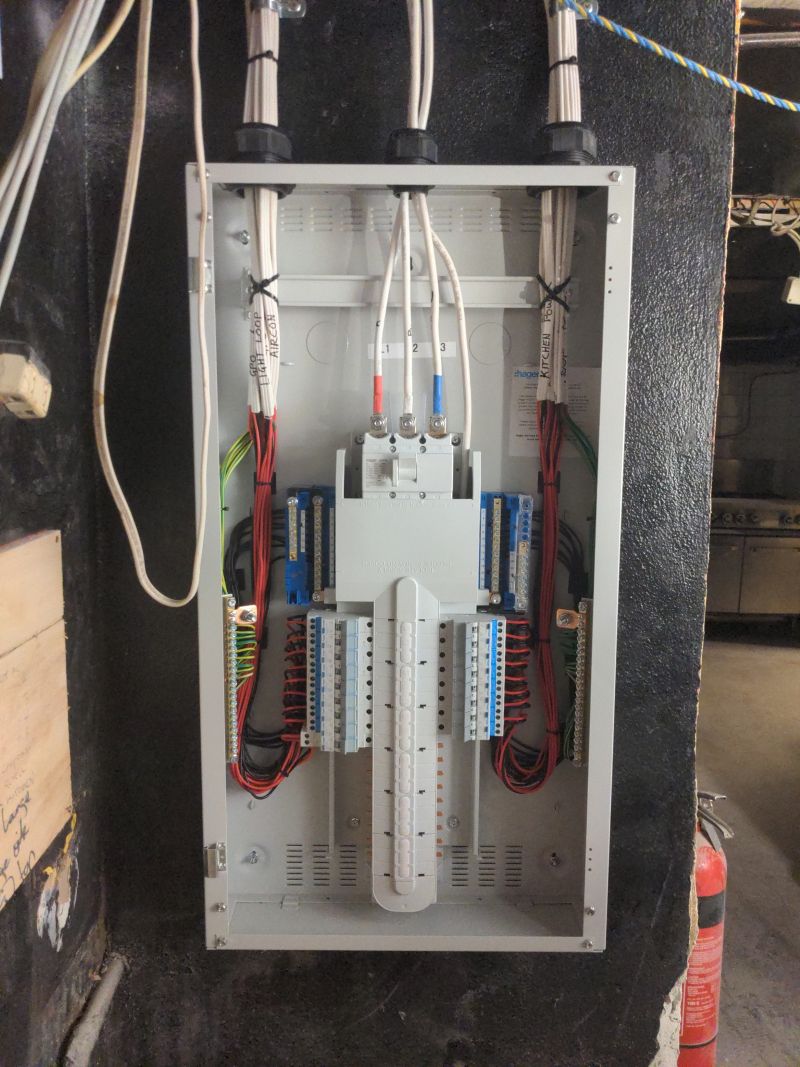
Rather than running multiple individual cables back to the main switchboard, installing a dedicated sub-board in your workshop provides a more efficient solution. Below are the benefits:
- Shorter cable runs — One heavy feed cable connects from the house (or a separate meter) to the workshop board, followed by shorter runs from the sub-board to each outlet. This setup reduces voltage drop and lowers cable costs.
- Simplified fault diagnosis — Each circuit is clearly labelled and easily accessible within the workshop. If a breaker trips, you won’t need to return to the house to reset it, enhancing efficiency.
- Future expansion — A properly sized sub-board allows for the addition of more circuits in the future, making it easy to incorporate new tools later.
- Isolation capability — You can turn off all workshop power from a single main switch without affecting the house’s electricity, which is a crucial safety feature.
If your house switchboard is outdated or at full capacity, an upgrade may be necessary to effectively support the workshop sub-board. Older ceramic fuse boards are unlikely to safely accommodate the increased load.
A typical workshop sub-board setup includes a main switch, individual RCBOs for each circuit, a dedicated lighting circuit, and a surge protection device. We will size the incoming feed cable based on the total expected load plus a buffer for future additions to ensure long-term efficiency.
Create a Comprehensive Lighting Strategy for Your Workshop
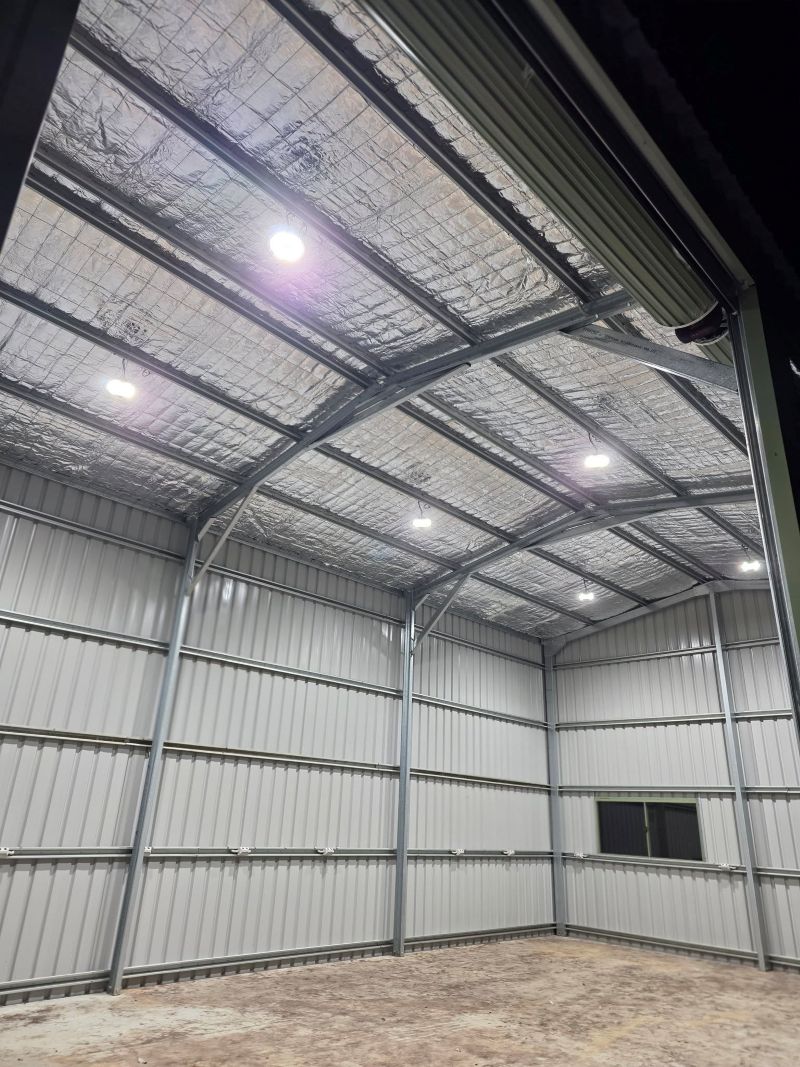
Adequate lighting is essential for safety in your workshop. Clear visibility is vital, particularly when working with sharp blades and hot materials. Below are some important lighting considerations:
- High-lumen LED battens — LED panels or battens provide bright, even illumination throughout the space. Aim for a minimum of 500 lux at bench height to ensure visibility.
- Dust-proof fittings — Standard lights can become obstructed with sawdust and metal shavings. Opt for IP-rated fittings that are resistant to dust and moisture for durability and safety.
- Task lighting at workstations — While overhead lighting covers the general area, focused lighting at the workbench, lathe, and drill press is crucial for precision work, enhancing both productivity and safety.
- Separate lighting circuit — Lighting should operate on its own circuit, ensuring you still have illumination if a power circuit trips. Being left in the dark next to a running table saw poses a significant safety risk.
We have extensive experience with lighting layouts in commercial spaces. Our team can assist you in crafting a workshop lighting plan that significantly enhances your working environment while adhering to safety standards.
Plan for Effective Ventilation and Dust Extraction Circuits
When engaged in woodworking or welding, ensuring proper ventilation is as critical as having sufficient electrical power. Dust extraction systems and exhaust fans require their own dedicated circuits due to several important factors:
- Continuous operation — Your dust extractor must run whenever you are cutting. It cannot share a circuit with the tool it serves, as this would compromise safety and effectiveness.
- Motor startup loads — Dust extraction fans and collectors can experience significant startup surges, similar to compressors, necessitating dedicated circuits.
- Interlocked switching — In a well-designed workshop, the dust extractor can be wired to activate automatically when specific tools are powered on. This requires careful circuit design and planning.
Plan for at least one dedicated 15A circuit for dust extraction and another for general ventilation to ensure proper airflow. If you are using a cyclone-style dust collection system, it may require a 20A circuit based on motor specifications.
Explore the Benefits of Three-Phase Power for Heavy Equipment
When you engage in intensive metalwork or operate large compressors (5HP+) or commercial-grade woodworking machinery, single-phase power may reach its limits. Three-phase power provides several distinct advantages:
- Increased power capacity — Three-phase motors are more efficient and provide greater power without the excessive startup surges often associated with single-phase motors.
- Support for larger welders and plasma cutters — Industrial MIG/TIG welders and CNC plasma tables typically operate on three-phase power, ensuring optimal performance.
- Smoother operation — Three-phase motors operate more smoothly and run cooler, extending the lifespan of your tools and enhancing overall efficiency.
Accessing three-phase power in rural areas of the Mid North Coast depends on availability at the street level. Some properties may already have a three-phase supply, while others might require a phase converter or a new connection from Essential Energy.
For further details, refer to our guide on Do I Need Three-Phase Power on My Property?
If three-phase power is available, your workshop will require the installation of a three-phase switchboard equipped with adequately rated breakers and an effective earthing system to ensure safety and compliance.
Protect Your Equipment with Surge Protection
Tools equipped with electronic controls, variable frequency drives (VFDs), digital displays, and inverter welders are particularly vulnerable to voltage spikes. Your workshop generates surges every time a large motor starts or stops. Coupled with the voltage instabilities often found in rural power lines, your equipment faces considerable risk.
Installing a surge protection device (SPD) at the sub-board can intercept voltage spikes before they impact your tools. This is a cost-effective measure compared to the expense of replacing the electronic components of a $3,000 welder or CNC controller.
If your property is prone to storms—which is common in the Mid North Coast—we recommend adding surge protection at the main switchboard to safeguard against lightning-induced surges that could damage your equipment.
For properties dependent on a generator for backup power, incorporating a generator changeover switch ensures smooth transitions between mains power and generator supply without risking back-feeding or damaging connected equipment.
Incorporate Additional Features into Your Workshop Fit-Out
Here are several more features to include in your workshop wiring from the beginning:
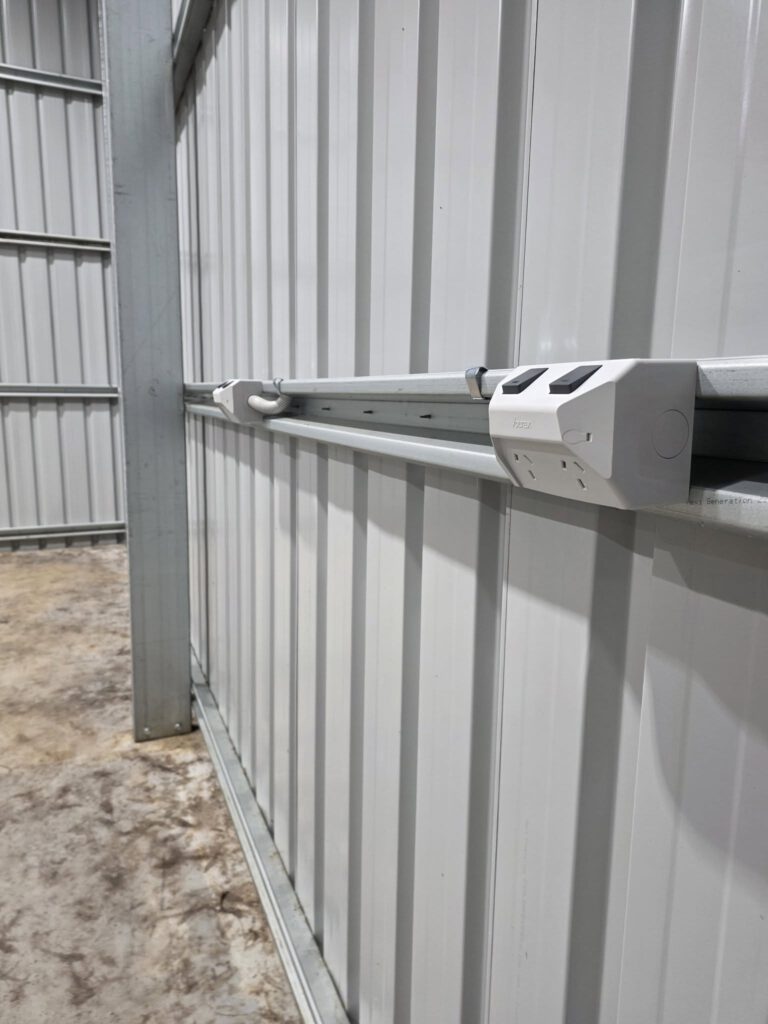
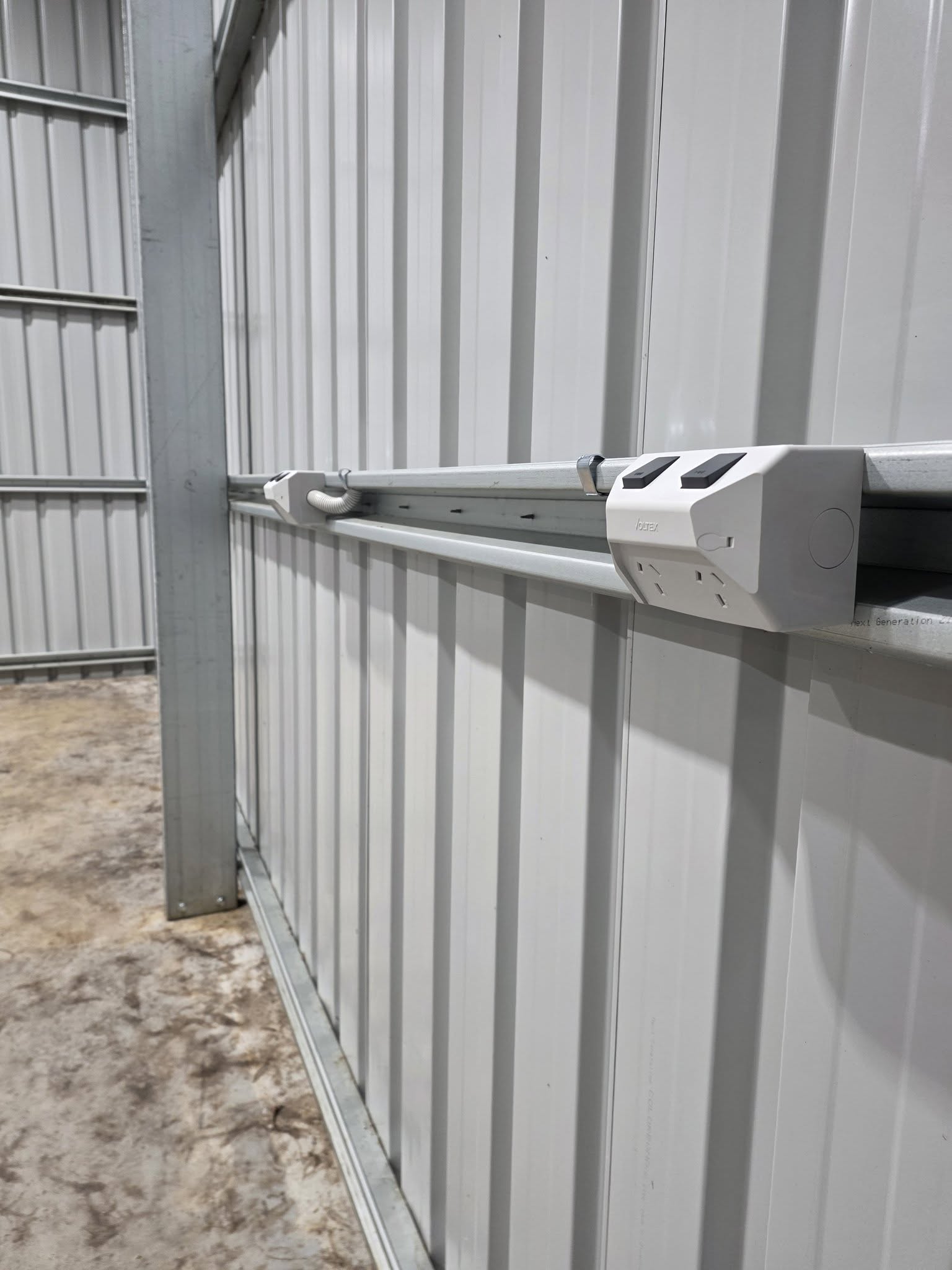
- Ample power points — Install more power points and switches than you think you will need. Use weatherproof GPOs if the workshop is open-sided. Consider double power points at every bench and outlets conveniently located near key machinery.
- Data and communications — If you require internet access for streaming music, operating a CNC machine, or monitoring security cameras, plan for data and TV wiring concurrently with the electrical setup. It is significantly easier to run cables during the initial fit-out than after the walls are completed.
- External lighting — Include floodlights outside the workshop to facilitate access during early mornings and late evenings, especially in rural areas that lack adequate street lighting.
- EV or equipment charging — If you are using electric equipment (such as battery-powered tools, an electric vehicle, or an electric quad bike), implement a dedicated charging circuit to prevent overloads on general outlets.
Estimate the Costs of Your Workshop Electrical Fit-Out
Cost estimates will vary based on the size of the workshop, the number of circuits required, and whether three-phase power is necessary. As a rough guideline for the Mid North Coast, consider the following:
- Basic single-phase setup (sub-board, 4–6 circuits, lighting) — Starting from $5,000
- Complete dedicated sub-board (8–12 circuits, multiple heavy tool circuits, dust extraction, comprehensive lighting design) — Starting from $10,000
- Three-phase workshop build (three-phase supply, dedicated board, heavy equipment circuits, complete fit-out) — Starting from $15,000+
These figures represent starting points. Complex layouts, lengthy cable runs from the mains, or the necessity for upgrades from Essential Energy will increase overall costs. We provide transparent quotes based on your specific workshop and equipment needs—there are no hidden fees involved.
Important Reminder: All Electrical Work Must Be Conducted by Licensed Professionals
This is a crucial point to emphasise. In New South Wales, all electrical wiring work must be performed by a licensed electrician. This includes the installation of new circuits, sub-boards, power points, and the connection of equipment. There is no DIY exemption for electrical work, even on your own property, to ensure safety and compliance.
Hack-It Electrical Solutions holds NSW Electrical Contractor Licence #230609C and operates throughout Bellingen, Coffs Harbour, Sawtell, Nambucca Heads, Woolgoolga, Urunga, Dorrigo, Valla Beach, and Toormina.
Engaging in unlicensed electrical work can void your insurance, create significant safety hazards, and lead to substantial fines. If someone offers to perform the work inexpensively without a licence, it is not a saving—it is a risk that could have dire consequences.
Your Frequently Asked Questions Addressed
Can I Use My Welder from a Standard Power Point?
Small stick welders (up to around 140A output) can indeed be used with a standard 10A or 15A power point. larger units necessitate a dedicated circuit. A MIG welder with a capacity of 200A or more connected to a 10-amp GPO will trip the breaker immediately or potentially cause the wiring to overheat if the breaker is faulty. If you are welding regularly, it is critical to have a dedicated 32A circuit installed for safety and efficiency.
How Many Circuits Are Typically Required in a Workshop?
The number of circuits needed will depend on your tools, but a well-equipped workshop generally requires a minimum of 8 to 12 circuits. This includes dedicated circuits for each heavy tool (welder, compressor, plasma cutter), general power point circuits, dust extraction, lighting, and a couple of spares for future additions. We tailor the design based on your specific equipment list to ensure optimal functionality.
Is Three-Phase Power Essential for a Home Workshop?
Not necessarily. Most home workshops operate adequately on single-phase power with dedicated circuits. Three-phase power is only required if you are using commercial-grade equipment, such as large compressors (5HP+), three-phase welders, or CNC machines. Refer to our complete guide on Do I Need Three-Phase Power on My Property? to determine if it fits your needs and operations.
Can My Existing Switchboard Support a Workshop?
It is possible. If your house switchboard is modern and has spare capacity, we can often connect a workshop sub-board to it. If it consists of an outdated ceramic fuse board or is fully loaded, an upgrade will be necessary before proceeding. Our team will evaluate this during the quoting process to ensure your workshop is adequately powered.
What Is the Typical Duration for a Workshop Electrical Fit-Out?
A basic single-phase setup can typically be completed within one to two days. A full fit-out encompassing multiple heavy circuits, three-phase power, and comprehensive lighting usually takes three to five days, depending on the complexity and distances for cable runs. We will provide a timeline along with your quote to keep you informed throughout the process.
Ensure Your Workshop Is Properly Wired for Maximum Efficiency
If you are establishing a workshop on your property and wish to ensure it is done correctly from the outset, contact us. We will visit your site, assess your space and equipment list, and develop a tailored plan that meets your power requirements without compromising safety or quality.
Contact Hack-It Electrical Solutions at 0402 079 803 or reach out to us online to arrange a quote for your project.
We are your local electricians in Bellingen, proudly serving the entire Mid North Coast from Nambucca Heads to Woolgoolga and up to Dorrigo.
Original Article First Published At: Powering A Workshop With Dedicated Circuits for Heavy Tools and Equipment
The Article: Dedicated Circuits for Powering Heavy Tools in Workshops first appeared on https://writebuff.com
The Article Dedicated Circuits for Heavy Tools in Workshop Power Solutions Was Found On https://limitsofstrategy.com
The Article Dedicated Circuits for Workshop Power Solutions with Heavy Tools found first on https://electroquench.com